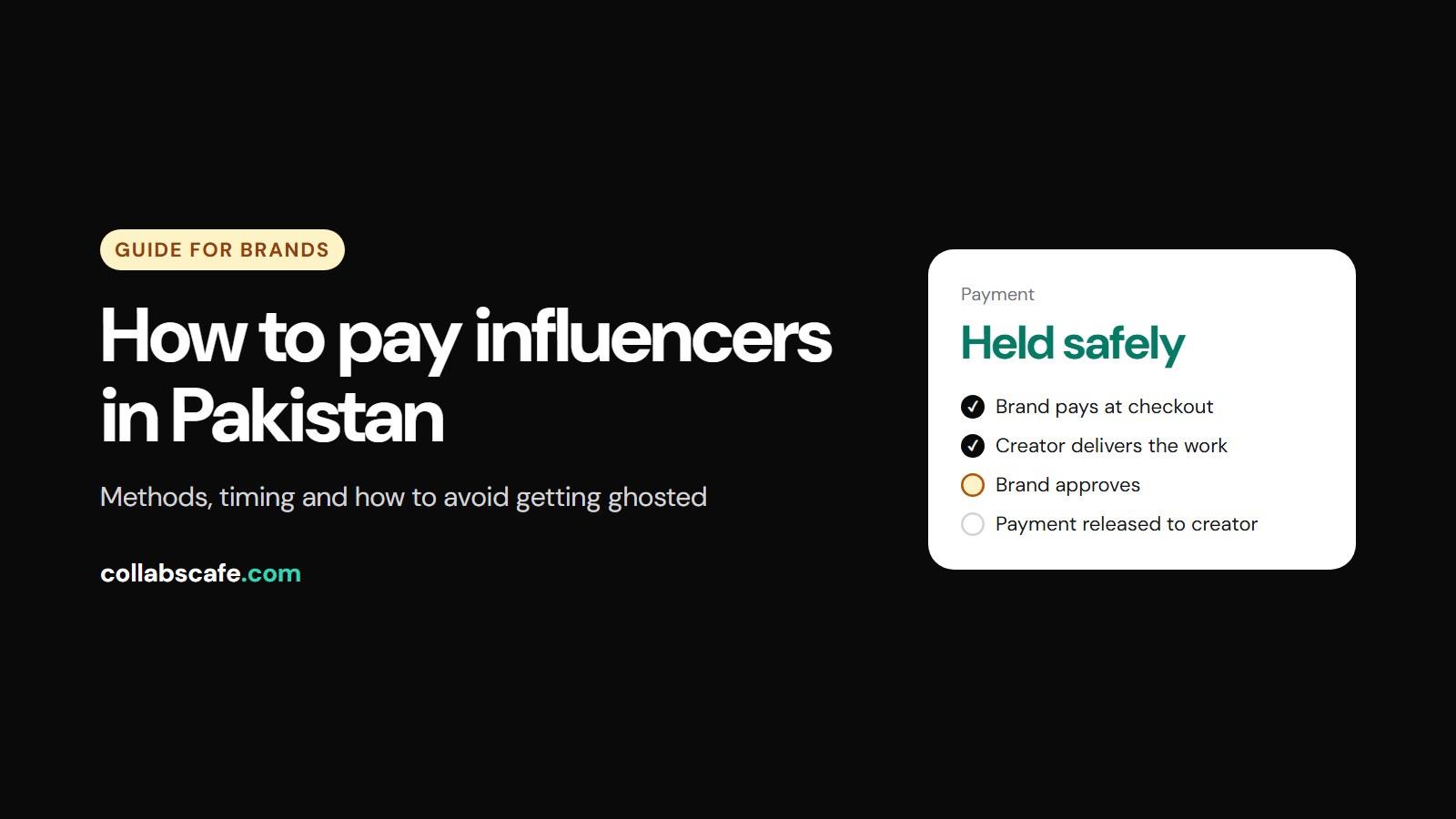
The short answer: agree the deliverables and dates in writing, then use a payment method that holds the money until the work is delivered. That one step removes most of the risk for both the brand and the creator.
Most creator deals in Pakistan don't fail on the content. They fail on the money. A brand sends an advance and the creator goes quiet. A creator posts the reel and waits weeks for a transfer that never arrives. Both sides have heard these stories, so both sides start every deal a little defensive.
This guide walks through how brands pay creators in Pakistan today, what each method leaves you exposed to, and how to set up payment so the deal actually gets finished.
Why payment is where creator deals go wrong
Influencer marketing in Pakistan grew up in DMs and WhatsApp. Deals are agreed in a few messages, prices are quoted in voice notes and payment terms are often just "half now, half later". Nothing is written down in one place.
That works until something changes. The creator gets sick and misses the date. The brand wants a different hook. The product arrives late. Without a written agreement and without anyone holding the money, every small problem becomes a question of trust, and the side that already paid carries all the risk.
The four ways brands pay creators
Before choosing how to send money, decide what you're paying for.
- Fixed fee. A set price for a set deliverable, for example one reel and two stories. This is the most common model and the easiest to agree on.
- Product plus fee. The creator keeps the product and gets a smaller cash amount. Common with nano and micro creators for products they would genuinely use.
- Commission. The creator earns a share of the sales they drive, tracked with a discount code or link. Good for online stores, but creators carry the risk, so most want a small fixed fee on top. Our affiliate program guide covers how to set this up.
- Retainer. A monthly amount for ongoing content. Works once you've done at least one successful collab with the creator.
Whatever the model, the creator's price should be clear before anyone talks about payment methods. Our Pakistan influencer rates guide shows typical ranges by tier and platform.
Payment methods used in Pakistan, and what each leaves you exposed to
| Method | Speed | Proof of payment | If the creator doesn't deliver | If the brand doesn't pay |
|---|---|---|---|---|
| Bank transfer (IBFT or Raast) | Minutes | Bank receipt | You ask for the money back and hope | Creator has no way to claim it |
| JazzCash or Easypaisa | Minutes | Wallet receipt | Same as bank transfer | Same as bank transfer |
| Cash | Instant | Usually none | Very hard to recover | Very hard to prove |
| Payment held by a platform | At checkout | Platform record | Refunded under the platform's terms | Money was already paid in, so the creator is covered |
Bank transfers and mobile wallets are fast and familiar, and for a creator you've worked with many times they're fine. The problem is that once the money moves, the brand has no leverage and no record of what was agreed. For a first collab with a new creator, that's where most of the risk sits.
Full advance, 50/50 or pay after posting
Each option protects one side and exposes the other.
- Full advance. The creator is protected. The brand carries all the risk if the creator disappears or delivers something unusable.
- 50/50. The risk is split, but neither side is fully protected. The creator can still lose half, and the brand can still lose half.
- Pay after posting. The brand is protected. The creator works for free until the brand decides to pay, which is why experienced creators often refuse it. We've written about why creators should stop working for free.
The reason these arguments happen is that the money sits with one side. When the money sits with neither side until the work is approved, the argument goes away.
Hold the money, not the creator. The brand pays before the work starts, so the creator knows the money is real. The money is released only when the brand approves the work, so the brand knows it's paying for something it can use. Both sides are protected at the same time.
What to agree in writing before any money moves
A two-line DM is not an agreement. Before paying anything, write down:
- Deliverables. Exactly what will be posted: format, number of posts and stories, platform.
- Dates. When the draft is due, when it goes live and how long it stays up.
- Revisions. How many rounds of changes are included.
- Usage rights. Whether the brand can reuse the video in its own posts or ads, and for how long. Usage rights usually add to the price, so agree them now, not after the video goes viral.
- Product delivery. Who sends the product, to which address and by when. A creator can't film a product that hasn't arrived.
Keep all of this in one place. Screenshots from three different chats won't help anyone settle a disagreement later.
Barter and gifting: when product only is fair
Product-only deals are common in Pakistan, especially with new creators. They're fair when the product is something the creator would use anyway, the ask is small (one story, one honest review) and the creator agrees freely.
They stop being fair when the brand asks for a full reel, usage rights and a fixed posting date in exchange for a product worth a fraction of the creator's rate. If you want professional content on a deadline, pay for it. Creators remember which brands paid them properly, and the good ones say yes to those brands first next time.
How payment protection works
Payment protection means a third party holds the brand's money until the agreed work is delivered and approved. On Collabscafe it works like this:
- The brand and the creator agree the deliverables and the price in the chat.
- The brand pays at checkout. The creator's price plus a platform fee are shown before payment, with no subscriptions.
- Collabscafe holds the payment. The creator gets the brief and starts work, knowing the money is already there.
- The creator submits the content. The brand approves it or asks for a revision.
- Once the brand approves, the payment is released to the creator.
If the creator declines, doesn't respond, misses the deadline or goes silent, the brand gets 100% of its money back, as set out in the Terms of Service. Creators never pay to join or to get paid. You can see the full flow on how Collabscafe works.
Paying many creators at once
Once you work with five or ten creators a month, payment becomes an admin job. Every transfer needs a receipt, every receipt needs to match a post and someone has to chase the creators who haven't delivered yet.
A few habits help:
- One record per creator per deal. Deliverables, dates, price and payment status in one place, not across WhatsApp groups and spreadsheets.
- Pay per deliverable, not per creator. If a creator does two reels, track them separately so one late reel doesn't hold up the whole payment.
- Approve before you release. Make approval a real step, so payment always follows a check of the work.
Agencies paying creators on behalf of several clients feel this most. Keeping each client's deals separate from day one saves hours at month end.
Checklist before you send the first payment
- The creator's price and deliverables are agreed in writing.
- Posting dates, revisions and usage rights are agreed.
- The product has been sent, or a date for sending it is agreed.
- You know how the creator will be paid and when.
- The money is held until the work is approved, so neither side is taking a blind risk.
Paying creators doesn't have to start with suspicion on both sides. Agree the terms clearly, keep the money in a safe place until the work is done, and the deal gets finished. Browse vetted creators or join as a brand to run your next collab with payment protection built in.
Frequently asked questions
Is it safe to pay an influencer upfront in Pakistan?
Paying the full amount directly to a creator you haven't worked with before is risky, because you have no way to recover it if the work isn't delivered. It's safer to pay through a method that holds the money until the work is approved.
Should I pay influencers before or after they post?
Paying after posting protects the brand but asks the creator to work for free first, and paying before protects the creator but puts the brand at risk. Holding the payment with a third party until the brand approves the work protects both.
How do brands pay influencers in Pakistan?
Most brands use bank transfers, Raast or mobile wallets like JazzCash and Easypaisa. These are fast but don't protect either side if something goes wrong. Platforms with payment protection take payment at checkout and release it to the creator after approval.
What if an influencer takes payment and doesn't deliver?
With a direct transfer, your only option is to ask for the money back. With payment protection on Collabscafe, if the creator declines, doesn't respond, misses the deadline or goes silent, you get 100% of your money back.
Do creators pay anything to get paid on Collabscafe?
No. Creators join for free and never pay to receive their payment. Brands see a platform fee added on top of the creator's price at checkout.